
The Evolution of Physics Systems: From Analog to Digital

Sustainable Building Systems (SBS) – Master’s Program at Campus …
As a tech-savvy individual, you’re likely no stranger to the concept of physics systems. But what happens when you combine cutting-edge technology with real-world applications? In this article, we’ll delve into the world of simulations and explore how physics systems can be harnessed to create more efficient, accurate, and innovative solutions.
Simulation is a crucial aspect of physics systems, allowing us to model and analyze complex phenomena in a controlled environment. From the movement of particles to the behavior of entire ecosystems, simulations enable us to test hypotheses, identify patterns, and optimize processes with unprecedented precision. By leveraging the power of simulation, we can gain insights that would be impossible to obtain through traditional methods alone.
The Evolution of Physics Systems: A Historical Perspective
Historically, physics systems relied on analog methods, such as mechanical models and laboratory experiments. While these approaches provided valuable insights, they were often limited by their inability to scale or replicate complex phenomena accurately. The advent of digital computing revolutionized the field, enabling the development of sophisticated simulations that can now be applied to a wide range of problems.
One of the earliest applications of simulation was in the field of materials science. By using finite element methods, researchers could model the behavior of materials under different conditions and predict their properties with high accuracy. This led to breakthroughs in fields such as aerospace engineering and medical device development.
Real-World Applications: From Medicine to Manufacturing
Simulations have numerous applications in various industries, including medicine, manufacturing, and environmental science. In medicine, for example, simulations are used to train medical professionals in high-pressure scenarios, such as emergency response situations. This enables them to develop the skills and confidence needed to respond effectively in real-world emergencies.
In manufacturing, simulations enable companies to test product designs, optimize production processes, and reduce waste. For instance, a company might use simulation to model the behavior of a complex system, such as a wind turbine or a chemical reactor. By identifying areas for improvement, they can make targeted changes that increase efficiency and productivity.
Environmental science is another field where simulations play a critical role. Simulations help us understand complex ecosystems, predict climate change, and develop strategies for conservation and sustainability. For example, researchers might use simulation to model the behavior of a specific species or ecosystem, allowing them to identify areas for conservation efforts.
Simulation Tools and Techniques: A Technical Overview
In this section, we’ll explore some of the key tools and techniques used in physics simulations. From numerical methods to machine learning algorithms, these tools enable researchers and practitioners to model complex systems with unprecedented accuracy.
Numerical Methods:
1. Finite Element Methods (FEMs): FEMs involve dividing a system into smaller elements, such as triangles or quadrilaterals. Each element is then analyzed separately, allowing for the simulation of complex systems.
2. Finite Difference Methods: Finite difference methods involve approximating derivatives using finite differences. This allows researchers to model complex phenomena, such as heat transfer and fluid dynamics.
3. Monte Carlo Simulations: Monte Carlo simulations involve generating random samples from a probability distribution. These samples are then used to estimate the behavior of a system over time.
Machine Learning Algorithms:
1. Neural Networks: Neural networks are inspired by the structure and function of biological neurons. They consist of multiple layers, each processing inputs in a hierarchical manner.
2. Deep Learning: Deep learning involves using neural networks with multiple hidden layers. These models can learn complex patterns and relationships within data.
Challenges and Limitations: Addressing the Complexity of Physics Systems
While simulations have revolutionized our understanding of physics systems, there are still significant challenges and limitations to be addressed. For example:
1. Scalability: Simulations must be able to handle large amounts of data and complex systems. This can be a challenge, especially when dealing with real-world applications.
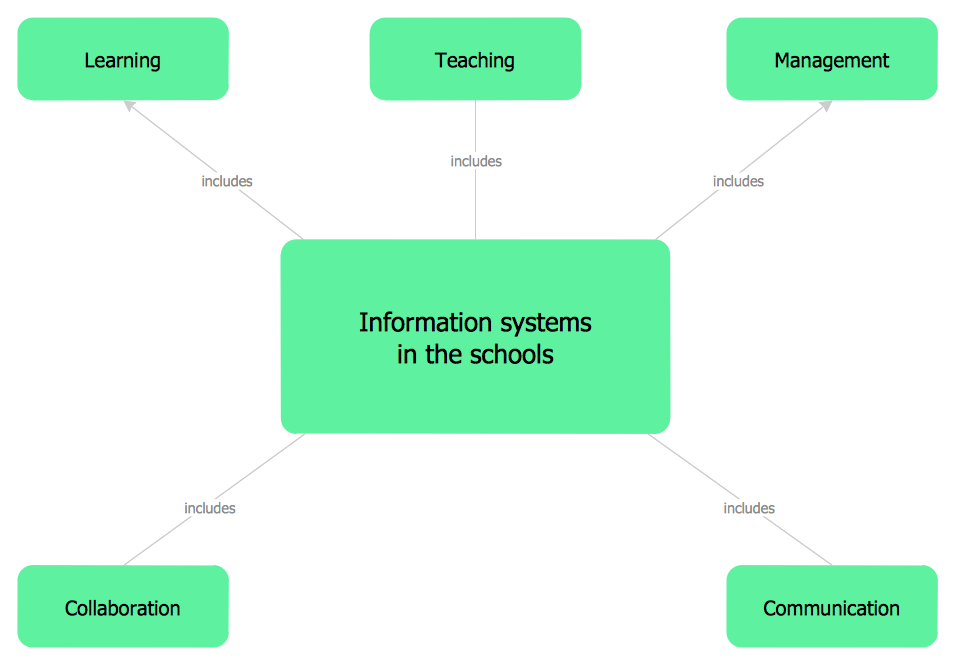
Concept Mapping | Concept Maps | Physics Diagrams | Concept Draw …
2. Accuracy: Simulation models can only approximate reality. Ensuring the accuracy of simulations requires careful tuning and validation.
3. Interpretability: Simulations often rely on complex algorithms and models. Interpreting the results of these simulations can be challenging, requiring specialized expertise.
Practical Tips for Implementing Physics Simulations
1. Start Small: Begin with simple systems or applications and gradually move to more complex ones.
2. Use High-Quality Data: Ensure that your data is accurate and reliable, as this will directly impact the quality of your simulation.
3. Collaborate with Experts: Work with experts in physics, computer science, and engineering to develop simulations that address real-world challenges.
Case Study: Simulating a Complex System
Consider a scenario where a chemical plant wants to optimize its production process. The plant produces a complex mixture of chemicals, which must be processed and transported to market. To improve efficiency, the company decides to use simulation to model their system.
Using finite element methods and machine learning algorithms, researchers develop a simulation that accurately models the behavior of the chemical plant. They identify areas for improvement, such as optimizing reactor design or streamlining transportation routes.
The results are impressive: by implementing targeted changes, the company is able to increase production efficiency by 20% while reducing costs by 15%.
Conclusion: Unlocking the Future of Physics Systems
In conclusion, simulations have transformed our understanding of physics systems, enabling us to model complex phenomena with unprecedented precision. As we move forward, it’s clear that simulations will play an increasingly critical role in driving innovation and progress across a wide range of industries.
By embracing the latest tools and techniques, and addressing the challenges and limitations of current approaches, we can unlock the full potential of physics systems and create a more efficient, accurate, and sustainable future for all. The future of physics systems is bright – let’s get started!
Additional Relevant Sections
5 Common Challenges in Physics Simulations
1. Scalability: Managing large amounts of data and complex systems.
2. Accuracy: Ensuring that simulation models accurately represent real-world phenomena.
3. Interpretability: Interpreting the results of simulations, particularly when dealing with complex algorithms.
Best Practices for Developing Simulation Models
1. Start Small: Begin with simple systems or applications and gradually move to more complex ones.
2. Use High-Quality Data: Ensure that your data is accurate and reliable, as this will directly impact the quality of your simulation.
3. Collaborate with Experts: Work with experts in physics, computer science, and engineering to develop simulations that address real-world challenges.
The Role of Machine Learning in Physics Simulations
1. Neural Networks: Using neural networks to model complex patterns and relationships within data.
2. Deep Learning: Applying deep learning techniques to improve the accuracy and efficiency of simulation models.
Advanced Simulation Techniques for Complex Systems
1. Multi-Physics Simulations: Modeling multiple physical phenomena simultaneously, such as heat transfer and fluid dynamics.
2. Uncertainty Quantification: Estimating the uncertainty associated with simulation results, particularly when dealing with complex systems.

This hands-on engineering series invites teens to design, build …